
xG in Football Explained: What It Means and Why It Matters


For long it felt like chaos ruled the game of football. One team can dominate for ninety minutes, have twenty shots on target, hit the post three times – only to lose 1-0 to a lucky breakaway goal in the final minute. But today there is a better way to know what really happened on the pitch – that's xG.
Before it became popular, we all looked at stats like total shots or possession. But those numbers can lie very much. Analysts can now use xG in football to strip away the noise of a lucky deflection or a world-class save and see which teams are actually controlling the game.
Let us look at how the xg rating of various teams tells the true story of the season and why it is the number one “number” in football today.
What xG Means in Football?
If you want to understand xG meaning in football, think of it as a probability score. Every time a player takes a shot, it asks – "how often do players score from this exact spot?” If the answer is 10% of the time, that shot gets an xG value of 0.10. If it is a very easy chance that goes in 50% of the time, the value is 0.50.
So, what xG does is that it puts a scoring chance on a scale from 0 to 1. A “0” means a goal can never be scored, a “1” means it is a sure goal. But no shot actually ever gets a 1 because there is always that tiny chance of a miss.
Trad stats only care if the ball hit the back of the net. But xG cares about how good the chance was in the first place. So, if a team wins 2-0 but only had an xG score of 0.3, it means they scored two very, very tough goals that they prolly wouldn't score again if the match was played again.
Also, luck eventually runs out in football. If a striker is scoring more goals than their expected goals, they are overperforming. On the other hand, there are usually teams that have a very high xG but are not scoring many goals – it is likely that they are just going through a cold streak and will start winning soon. Smart punters can use this insight when browsing betting sites to find value bets and better predict which teams are truly likely to win.
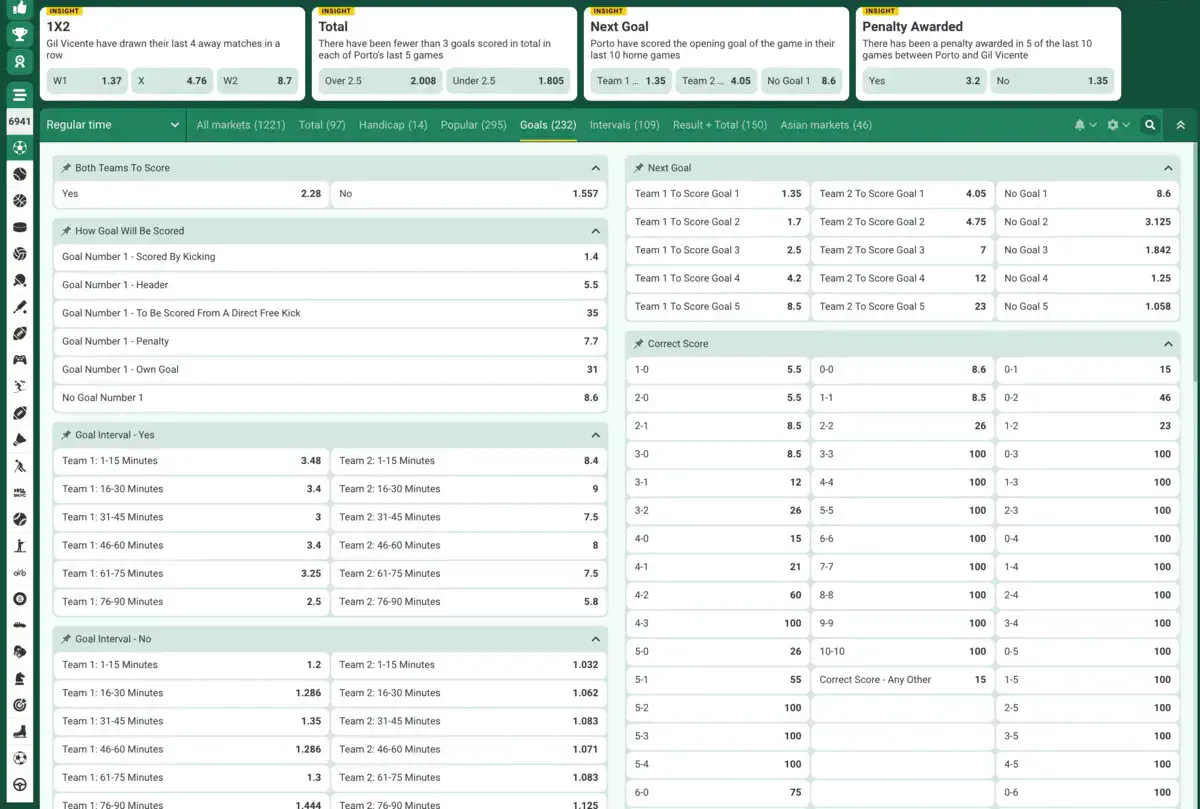
League tables only show points and goals – which a few weeks of good or bad luck can “lie” about. But from the table that shows the goals expected, a smart bettor sees which teams are actually playing well, no matter the recent scores. This helps to fish out value bets – where the bookie prices a team too high because they haven't won in recent times.
How xG is Calculated and Why It Matters
Hundreds upon hundreds of data points from past years of football come in when you calculate the xg rating of a shot. Analysts look at some variables when a player takes a shot – the most obvious is the distance from the goal. A shot from five yards is of course more likely to go in than one from thirty yards.
But the angle is just as important. A shot from a central position has a much better view of the net than a shot from a tight angle near the corner flag. If you are right in front of the goal, the xG will be high. But if you are out wide, it drops a lot.
Other things to look at are the type of play. Was it a fast counter-attack or a slow build-up against a set defense? Was the shot a header or taken with the foot? On the whole, headers are harder to score than shots with the feet – so they get a lower xG. The type of assist also matters. A through ball that puts a player one-on-one with the keeper is a higher-quality chance than a high cross into a crowded box.
We can see which team "deserved" to win if we add up the expected goals of all the shots in a match. If Team A has an xG of 2.5 and Team B has 0.8, but Team B wins 1-0, we know that Team B was very lucky. They relied on a single low-probability event while their opponent failed to convert several high-probability events. Over time, the team with the 2.5 xG will win way more often.
It is also important to know how the difference between over-performance and under-performance matters. Over-performance happens when a team scores more goals than their expected goals say they should. This may be because they have an elite finisher, or it could just be a run of good luck. Under-performance is when a side misses big chances they should be scoring.
How Football Clubs Use xG?
Clubs use goals expected for almost every top decision they make in the Premier League’s hot competition. One pop example is Liverpool. They got Mohamed Salah and Andrew Robertson by looking at how many high-quality chances they were involved in – even if they weren't the biggest stars at their previous clubs.
Even Manchester United is looking at how to better their xG per match. United saw a big jump in their attack in the 2025/26 season. Their non-penalty goals expected per ninety minutes went up from 1.21 in previous years to 1.44. This shows they are creating better looks for their forwards.
Smaller clubs like Brentford use xG in football to compete with giants. This has allowed them to stay in the Premier League and beat much richer sides. By simply being smarter with their data. It is proof that you don't need a billion dollars to win if you have the best betting formula to always win.
Top 10 Teams by xG Season 2025
The 2024/25 season gave us a clear look at which teams were the most dangerous in deed and in truth. Yes, the league table shows the points. But the xG table shows who actually played the best football.
The table below tells the top ten teams from the 2024/25 Premier League season – based on their average xG per match.
Rank | Team | Avg. xG per match (2025) | Total Actual Goals |
|---|---|---|---|
1 | Liverpool | 2.20 | 86 |
2 | Manchester City | 1.82 | 72 |
3 | Chelsea | 1.82 | 64 |
4 | Newcastle United | 1.72 | 68 |
5 | AFC Bournemouth | 1.71 | 58 |
6 | Arsenal | 1.62 | 69 |
7 | Crystal Palace | 1.61 | 51 |
8 | Brentford | 1.58 | 66 |
9 | Tottenham Hotspur | 1.57 | 64 |
10 | Brighton & Hove Albion | 1.56 | 66 |
This table holds surprises. Bournemouth and Crystal Palace, for instance, are in the top seven for xG in football – even though they finished lower in the league table. This tells a smart analyst that these teams were actually very good at creating chances but perhaps were unlucky with their finishing or hit the woodwork a lot.
Arsenal, on the other hand, scored more goals (69) than their xG (61.6) suggests they should have. This shows that their players – like Kai Havertz and Bukayo Saka – were finishing many very tough chances.
How Expected Goals (xG) Can Improve Your Betting
Most people bet by the score of the last game. If a team won 3-0, they bet on them to win again. But a sharp bettor looks at the goals that were expected for that 3-0 win. If the goals expected were actually 0.5 to 1.2, they know the team was very lucky. And their 3-0 win was a bit of a mirage. When you know this, you know to bet against overvalued teams and on undervalued ones.
The betting markets most times overreact to results. When a big team loses, the bookies might drop their odds for the next game. But if the xG data says the big team was actually on top of the game but just couldn't score, you've found a value bet.
You can also use the xg rating to get the hang of the "Over/Under" markets. If two teams with a high xG and a high expected-goals conceded are playing each other, you are looking at a likely "goals-fest". On the flip side, if both teams have very low xG numbers, the "Under 2.5 goals" bet becomes the better way to go. This is much more reliable than just looking at form – which can be skewed by a single high-scoring game that doesn't actually tell how the teams play.
Also, you can use expected goals to bet live. If you are watching a game and one team has 1.5 goals expected at halftime but the score is 0-0, you know they are creating great chances. This might be the spot-on time to bet on them to score first or win the game – the odds will be higher because they haven't scored yet.
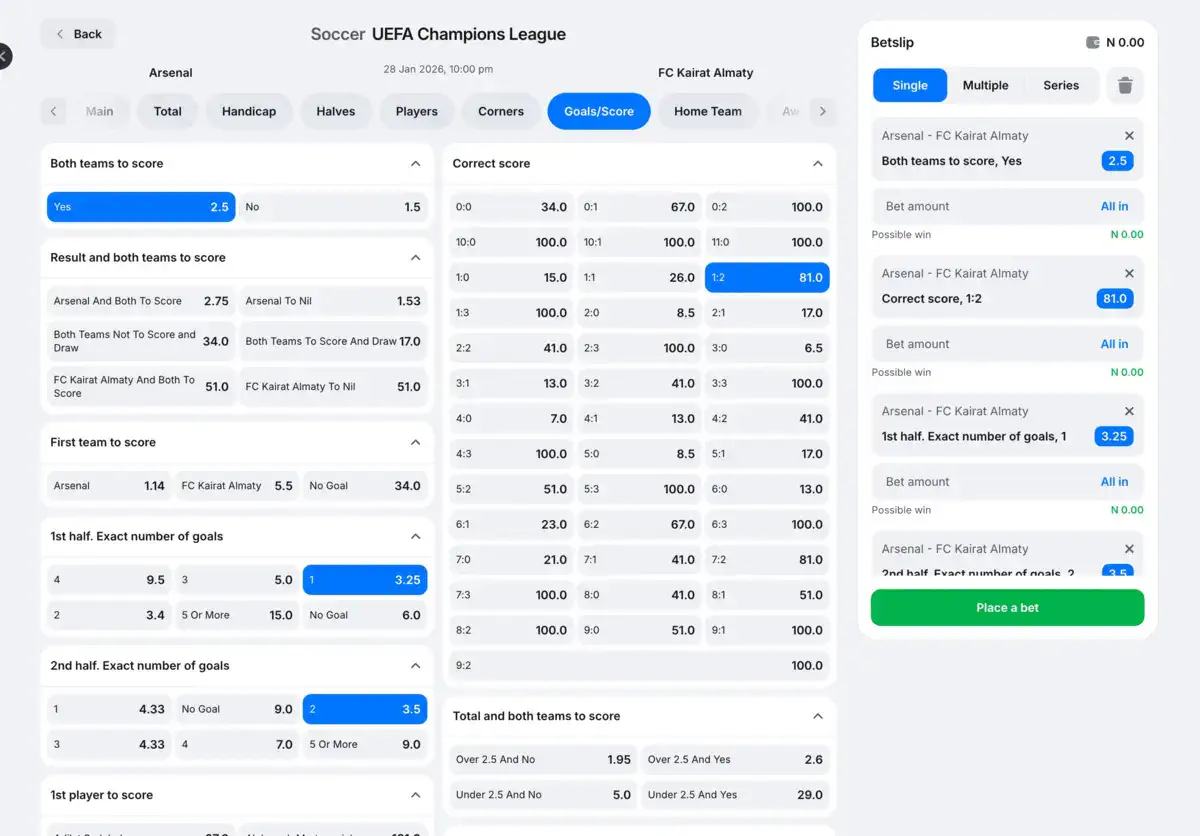
But remember – xG is a tool. Not a guarantee. You still need to check for "injuries," for "red cards," for "tactical changes", et cetera. If a team's star striker who creates all their expected goals is out injured, their previous stats don't matter as much. But if you add the data to good research, you will be way, way ahead of the everyday gambler.
Conclusion - Why xG Matters
Goals expected take games away from what people think or what they just argue – it brings in proof and probability. Are you thinking about why your team is struggling? Or looking for the next betting formula to always win? These numbers are the most sincere answer you can get. This tells us that football is a game of patterns that repeat – where the quality of the chances you create is the number one predictor of success over time.
Once you look past the actual score and check the xG score, you can better appreciate the skill of a team that creates twenty chances even if they don't win.
So, the next time you hear someone ask what is xG in football, you now know that it is why clubs like Liverpool and Brentford seem more than what they actually scored – and if you want to combine this insight with data-driven betting, check out our math predictions to see which teams and matches offer the best value.