
Red Card Rules in Football: Basic Guide for Beginners

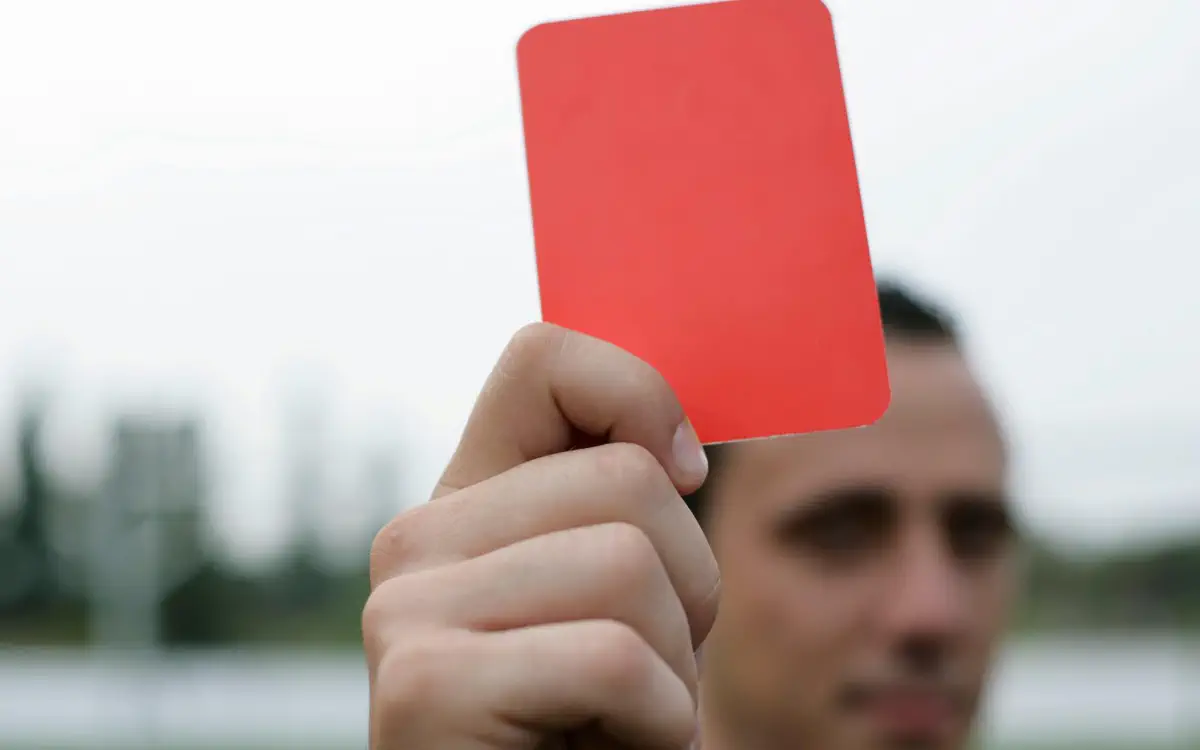
Once in a while in football, the referee shows a red card. This is the most serious penalty a player may receive during a match. Football rules ensure the safety of the players and the fairness of the game, and the referee must intervene when a player breaks these rules.
The red card originated in the 1960s, when referee Ken Aston observed a traffic light as he was driving home. He realised that red is a sign to stop all over the world. So, FIFA introduced coloured cards at the 1970 World Cup to coloured cards to overcome language differences. Today, the red card is a symbol of discipline around the world – to punish dangerous play or behaviour that goes against the spirit of football.
What Does a Red Card Mean in Football?
A red card means the player must leave the match immediately.
In reality, this moment often changes the entire flow of the game.. This is often called a “dismissal” or being “sent off”. The referee shows the card when a person violates a major rule. And it's the ultimate disciplinary action that a referee can take.
So, what does a red card mean in football? Unlike other sports, a dismissed player cannot return later in that same match – their time on the pitch is over. They must leave the field of play and go straight to the dressing room. Also, the team cannot bring on another player to replace the dismissed one. They must finish the game with ten players instead of eleven. This creates a big disadvantage – the remaining players have to work harder to make up for the dismissal.
In most leagues, a player who receives a red card is also automatically banned from the next match. What’s more, a red card dents a player’s record: it shows a failure to stay disciplined under pressure. For coaches and fans, it’s frustrating because it often leads to defeat.
What Happens after a Red Card?
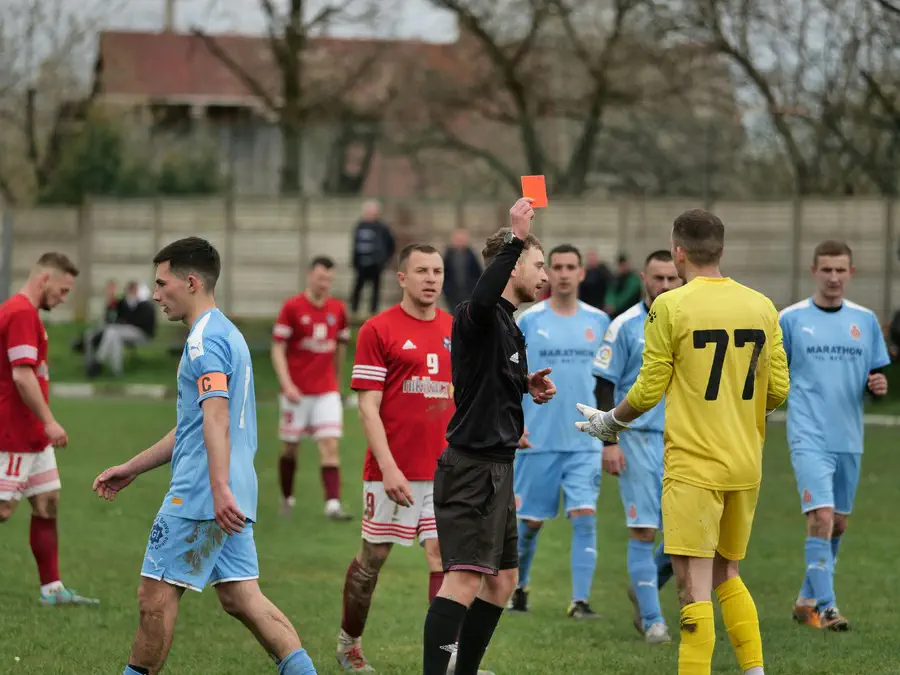
The player must leave the field once the referee shows the red card. And they’re not allowed to stay on the bench. Instead, they must go into the tunnel or leave the stadium area entirely. The referee cannot restart play until the dismissed player leaves the pitch.
The exit is core to the red card in football rules, and referees must obey it. A player will face even harsher penalties from league authorities later if they refuse to leave. After the player leaves, the team reorganises their defense and attack. Usually, the coach makes a substitution to make up the gap in the formation. For example, if a defender is sent off, the coach might replace a striker with another defender.
The situation is complicated if the goalkeeper receives a red. A football team must always have a goalie between the posts. So, the coach takes off one of the outfield players and brings on the second-choice goalkeeper.
It's more serious if a team has already used all their substitutions. One of the players on the field must wear a goalkeeper jersey and gloves. Of course, these makeshift goalies struggle because they are not trained for the role.
When Is a Red Card Given?
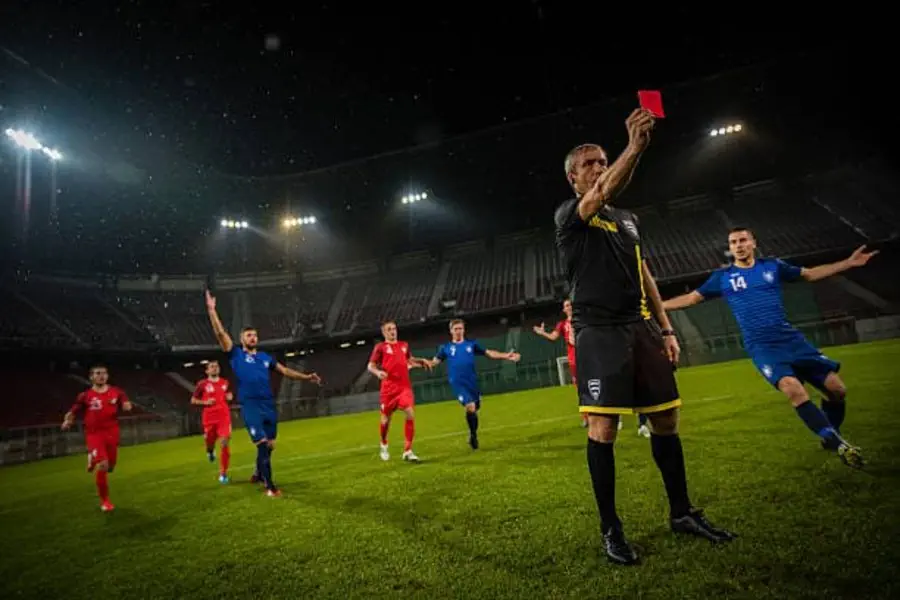
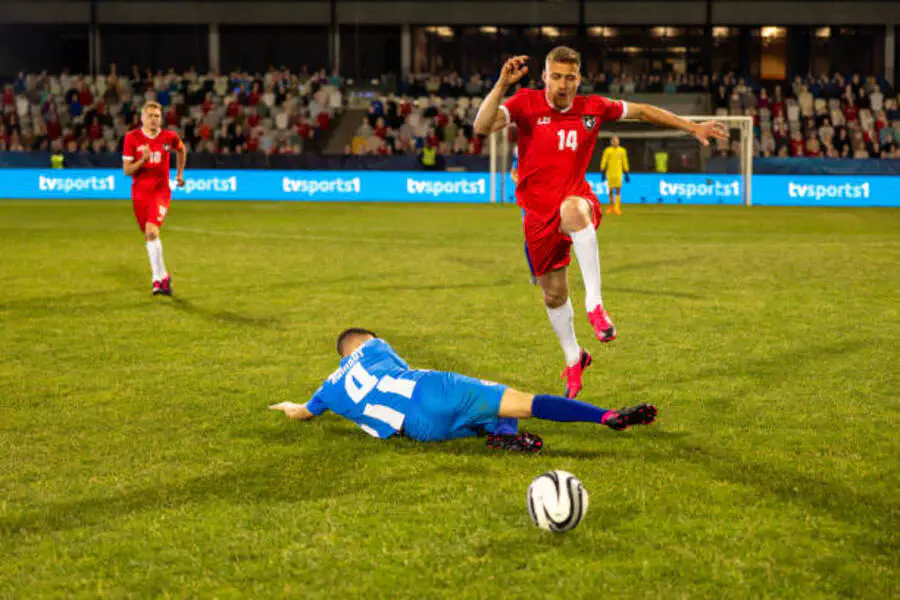
The referee follows strict rules to decide whether a foul deserves a red card. These rules are in the Laws of the Game. Most dismissals happen because of a serious foul – a dangerous tackle or use of excessive force that could hurt an opponent.
Another common reason is violence. This is not the same as a normal foul because it involves physical aggression when the ball is not nearby or a contact that is not a tackle. A player will receive a red if they punch, kick, or head-butt anyone. And this includes fights between teammates or even staff members on the sidelines.
Referees also use the red card rules to punish players who stop a clear goal-scoring chance through a foul or handball offence. This is known as DOGSO. A defender is sent off if they are the last player before the goal and they trip an attacker. The same thing happens if an outfield player uses their hand to stop a ball from entering the net.
Bad language and gestures also lead to a dismissal. The referee shows a red card in football if a player says offensive or abusive words to the referee or an opponent.
Situation | Reason for Dismissal |
|---|---|
Dangerous Tackle | Serious foul play |
Punching/Kicking | Violent conduct |
Last Man Foul | Unfairly denying an obvious goal-scoring opportunity |
Handball on Goal Line | Intentional handball to stop a goal |
Spitting/Biting | Extreme misconduct |
Abusive Talk | Offensive language or gestures |
Two Yellows | Receiving a second caution in one match |
Finally, a player is sent off if they receive two yellow cards in the same match. This is called an indirect dismissal. The first yellow is a warning, and the second sets off the straight red card rules for a player to leave the game.
Who Can Receive a Red Card?
Many beginners believe only players on the field can be sent off. But almost anyone officially involved in the match can receive a red card. This includes all the players on the pitch and substitutes on the bench. In fact, a substituted player can still get a red card. The referee can dismiss them if they breach the rules on the sidelines. This means they must leave the dugout and go to the locker room, as an active player would have to do.
The direct red card rules also bind the coaching staff. Managers, assistant coaches, and medical staff can be sent off if they misbehave. This usually happens when they argue too much with the officials or leave their technical area to interfere with play. A dismissed coach cannot give instructions.
There's a rule for when a group on the sidelines starts a fight and the referee cannot tell who started it. The head coach gets the card because they are responsible for staff behaviour.
When a coach is sent off, it's a major problem for the team. The coach must watch from the stands and cannot communicate with the players. And this can make the team lose focus and tactical direction.
Difference Between Yellow and Red Cards
The difference between a yellow card and a red card is severity. A yellow card is a final warning from the referee; a player who receives one is cautioned. This means they remain in the game but must be careful.
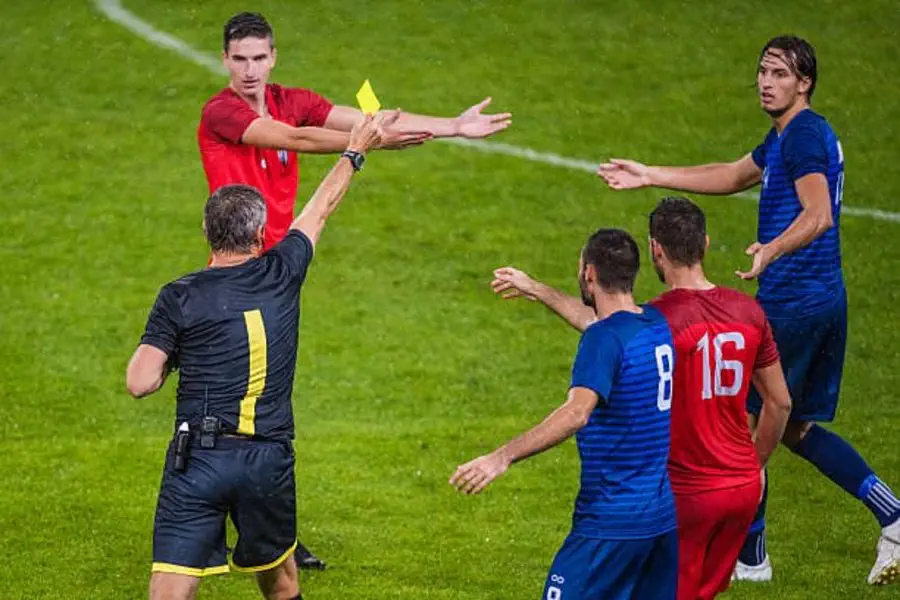
The red card, on the other hand, is immediate dismissal. There's no second chance.
These situations are also key when looking at cards predictions, where punters focus on matches with high foul intensity.
Tactically, a yellow card changes how an individual plays. A cautioned defender will often be less aggressive because they don't want to get a second yellow. Sometimes, the opposing team tries to make this player commit another foul – a psychological battle that can last the rest of the match.
Feature | Yellow Card | Red Card |
|---|---|---|
Action | Caution (Warning) | Sending-off (Dismissal) |
Player Status | Remains on the field | Must leave immediately |
Replacement | Not applicable | Team plays down a player |
Offense | Reckless play, dissent | Dangerous play, violence |
Ban | Accumulation leads to ban | Automatic next-match ban |
Finally, a red card in football almost always results in a suspension from future matches. Yellow cards only cause a suspension when a player receives several of them over many weeks. In many leagues, for example, five yellow cards in a season result in a one-game ban.
How VAR Affects Red Card Decisions?
In modern football, the Video Assistant Referee (or VAR) assists the referee. They use cameras to help the referee avoid clear and obvious errors. One of the few things the VAR checks are red card situations in football. And this has made the game more accurate and fair.
VAR officials in a remote room watch the replays whenever a referee dismisses a player. If they think the referee made a mistake, they tell them via a headset. The referee can then go to a screen on the sideline to watch the incident again. This ensures no player is wrongly dismissed.
VAR also detects serious incidents that the referee might have missed. If a player punches an opponent while the referee is looking the other way, the cameras capture it. VAR then alerts the referee, who can stop play to show the red card.
But there are limits to what technology can do. For instance, VAR is not allowed to check second yellow cards; it is only concerned with straight red cards. So if a referee mistakenly gives a player a second yellow, VAR cannot intervene unless a red was also possible.
VAR delays frustrate some fans, but stats show that this technology has improved the accuracy of match-changing decisions. For example, accuracy rose from 95% to over 99% at the 2018 World Cup.

How a Red Card Affects Team Tactics
The team must change their strategy when a player is dismissed. A ten-man team has a gap that the opponent will try to exploit. The coach often parks the bus when that happens, which means the team drops deep and focuses on defence. This is the most common tactical response to a soccer red card.
The remaining ten players have to do a lot more physically. Each player must run more to cover for the missing player's area. This causes fatigue late in the game and can result in more goals for the other team.
From a betting perspective, this often impacts over/under betting, as matches with a red card tend to produce more scoring opportunities, especially in the second half.
The team relies on counter-attacks to score. They have fewer players, so they cannot control the ball for long periods. Instead, they wait for the opponent to make a mistake and then break forward quickly with the ball. This is risky. But it's often the only way a ten-man team can score.
The eleven-player team usually tries to widen the pitch. They pass the ball from side to side to fatigue the ten men. Their aim is to stretch the defense until there's a gap.
Interestingly, some teams play better after a dismissal. The red card can motivate the players to work harder. There are many famous matches where a ten-man won, against the odds.
How Long Is a Suspension after a Red Card?
A dismissal does not only take a player off the current match; it is also a ban. The duration of this ban depends on the league and the type of foul. For a second yellow card, it's usually one match. A goal-stopping foul also results in a one-game ban.
But the straight red card rules in the Premier League and other top leagues are stricter for violent acts. If a player is sent off for violent conduct – e.g. punching – they usually get a three-match ban. The ban is even longer for appalling offences, e.g. spitting at an opponent. Under the UEFA red card rules, spitting results in a six-match suspension. The league can also add fines to these punishments.
Offense Type | Standard Suspension Length |
|---|---|
Two Yellow Cards | 1 Match |
Professional Foul | 1 Match |
Abusive Language | 2 Matches |
Violent Conduct | 3 Matches |
Serious Foul Play | 3 Matches |
Spitting/Biting | 6+ Matches |
The redcard rules are slightly different in international tournaments because of the shorter schedule. For example, the red card rules in World Cup games suspend a player for the very next match. If the foul was violent, a disciplinary committee meets to decide whether the ban should last for the rest of the tournament or beyond.
Notable Red Card Incidents in Football History
There are many moments of historic dismissal in football. One of the most famous came in the 2006 World Cup. Legendary French footballer Zinedine Zidane head-butted an Italian defender and was sent off in the last game of his career. France lost the match.
Another incident occurred in 2005 during a match between Newcastle and Aston Villa. Two Newcastle teammates, Lee Bowyer and Kieron Dyer, started fighting on the pitch. The referee gave both of them a red card, and their team came down to nine players.
One of the biggest referee blunders happened during the 2006 World Cup. Referee Graham Poll gave Josip Simunic three yellow cards before showing the red. This was a big error because the rules say that a player must be sent off after two yellow cards.
A match in Argentina also set a world record for most dismissals in one game. A fight broke out between the two teams, and the referee gave thirty-six red cards. This included all players on the field, all substitutes on the bench, and some of the coaching staff from both sides.
Common Myths about Red Cards
Beginners often have several misunderstandings about red card rules. One common myth is that it’s not a foul if you touch the ball first. This is wrong. A referee can give a red card if the tackle was dangerous or involved excessive force, even if the player kicked the ball before hitting the opponent.
Another myth is that the referee only gives a card if the player “meant” to do a foul. In reality, the referee looks at the action and the danger, not just the intent. For instance, if a player accidentally kicks an opponent in the head while trying to win the ball, it's still a dismissal because it's dangerous play.
The double penalty rule also confuses many fans. In the past, if a defender fouled a player in the penalty box, they received a red and the other team got a penalty. But the FIFA rules on red card and penalty changed in 2016. Now, the player only gets only a yellow card if they genuinely attempted to play the ball. But this doesn't apply to every situation. If a player intentionally handles the ball to stop a goal, or if they push or pull an opponent without attempting to play the ball, they will be sent off.
Lastly, some people believe a red card in football can be cancelled if the player apologises. This never happens. The decision is final for that match once the referee shows the card and play restarts. The only way to change the ban is through an appeal after the game, where officials review the video footage.

Final thought
The red card makes football safe and fair. And its rules have evolved to protect the beautiful game. Frustating as it can be, it adds drama and tactical depth.
Knowing these red card rules as a beginner helps you appreciate the skill and discipline required to play at the highest level. You'll understand why a coach makes a certain change or why a player becomes cautious after a yellow card. Football is a regulated game, and the red card reminds players that respect for the rules is important.