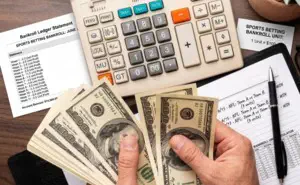
Betting Formula to Always Win – What Works and What Doesn’t


Almost every punter has once gone on Google and searched the famous ‘how to always win in sports betting, or betting formula to always win. Whether it’s fresh off a bad run of bets or you’re just starting out, it’s a thought that has crossed your mind. Well, I’ll start off by saying that there’s no ‘100% winning formula’ in this guide or any guide for that matter, and anyone promising you that is probably out to scam you.
However, if you’re tired of placing blind wagers or just bad ones because the odds apparently looked too good, then what you need is a full understanding of how odds work and strategies to help you spot value bets and win in the long term.
When you understand the ways of the odds, betting becomes clear, fewer mistakes are made, and you might even start stacking small edges more often.
Converting Odds into Implied Probability
We don’t need to tell you how important odds are in betting, but aside from telling you how much you’re going to win from a wager, they also represent the bookmaker’s assessment of the likelihood of an outcome.
So those numbers you’re seeing are telling you the implied probability of that event occurring. Now, to get to the implied probability in percentages, the formula is simple:
Implied Probability (%) = (Stake / Total Payout) x 100.
For example, if you place a $10 stake on Chelsea to beat Arsenal at odds of 2.50, your total payout would be $25 ($10 stake + $15 profit). Using the formula:
- Probability = (Stake / Payout) = $10/$25 = 0.4
- Convert to a percentage: 0.4 x 100 = 40%
This means the odds of 2.50 imply a 40% chance of Chelsea beating Arsenal. By converting the odds into a percentage, you can see the true ‘price’ of a bet and decide if you think the bookmaker got it right.
But you have to remember that bookies look at different things when setting these odds. So if there’s any major change, like a player getting injured or some tactical twists, the odds will change too. The bookies can also update the odds when too many punters are backing a particular option.
Using the earlier example, say Arsenal’s starting goalkeeper had an injury during the warm-up to the game, the odds for Chelsea to win could be reduced to 2.00. Still with our $10 stake, the new probability would be:
- Probability = (Stake / Payout) = $10/$20 = 0.5
- Convert to a percentage: 0.5 x 100 = 50%
This means that the bookie now believes that Chelsea has a 50% chance of winning due to Arsenal’s major injury. If it’s a Chelsea injury, the odds can also increase to 4.00, which reduces Chelsea’s probability of winning to 25%. So if you personally believe that Chelsea’s actual chance of winning is greater than the original 40%, you may have got yourself a value bet, and that’s the first step to successful long-term betting.
Why the Bookmaker Always Wins
I know you’re probably thinking that betting is a completely fair game between the bettor and the bookie. The punter makes bet odd predictions, and if they are right, they get paid, while the bookie loses cash. However, this is not what really happens, as the system is designed to make sure the bookie profits no matter what happens in the event.
This is possible through something called margin that is built into every bet odd and creates an over-round. Here’s how it works.
Earlier, we talked about probability, and we all know that the probability of all possible outcomes in an event must equal 100%; it's standard math. For example, if you toss a coin, the probability of heads is 50% and tails is 50%, summing to 100%.
Bookmakers alter this principle and instead of offering odds that reflect 100% true probability, they offer odds that represent a larger percentage, often between 102% and 110% or even higher in some bookmakers. This extra percentage is the margin, ensuring that the bookmaker takes in more money than it pays players in the long term.
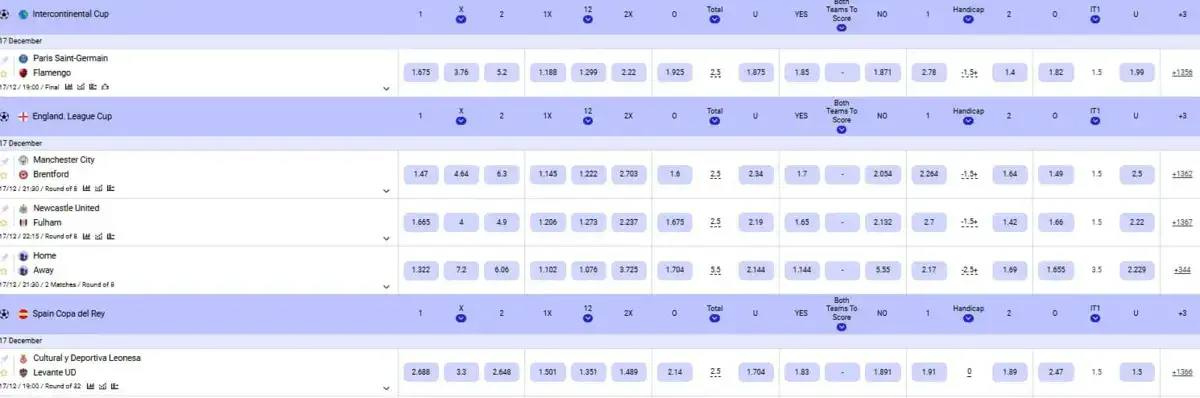
So back to our Chelsea vs Arsenal example, here’s an example of 1X2 odds for the game:
- Home winning odds: 1.90
- Draw: 3.90
- Away winning odds: 4.20
If we use our probability formula, the numbers will come out as 52.63%, 25.64%, and 23.81% for 1, X, and 2, respectively. Everything sums up to 102.8%, which means the bookie gets a 2.08% profit margin.
So, imagine the total amount staked on this match is $100. If the bets are split according to the implied probability, you’ll have a $52.63 wager, a $25.64 wager, and a $23.81 wager. If you combine the three stakes, you get $102.08 because, despite the punters staking just $100, the higher implied probability makes it $102.8.
Now, for the payout. If the Home bettors win, the bookie pays out $52.63 x 1.90, which is $100. If it’s a draw, they payout $25.64 x 3.90, which is also $100, and if the Away wins, they pay the away punters $24.81 x 4.20, which again sums to $100.
See the pattern? The bookmaker collected $102.08 but only ever pays out $100. The $2.08 is their guaranteed profit, thanks to the built-in margin.
This might be confusing, as that $100 won’t be split perfectly like that in the real world. But the margins are always there, meaning the bookmaker always wins in the long run.
Betting Formulas and Strategies That Claim to Always Win
I’ll say it again: any betting formulas or mathematical prediction systems that guarantee a 100% win rate are a myth.
However, while you cannot eliminate risk, you can use strategies with a positive mathematical expectation to turn the long-term odds in your favor. These are not magic bullets, but tips and disciplined systems that can bring you closer to your dream of big wins.
- Value Betting: This involves finding bets where you believe the true probability of an outcome is higher than the implied probability suggested by the bookmaker’s odds. Like our earlier example, you believe Chelsea has more than a 40% chance of beating Arsenal? You can lock the wager in. If you continue to find value, you will profit in the long run.
- Arbitrage Betting: This is one of the better mathematical betting tips, and as close as you can get to a certain winning bet. It involves placing bets on all possible outcomes of an event across different bookies and exploiting the slight differences in odds between them. Say Chelsea to win on Bookie A was 3.10, and Chelsea NOT to win or draw was 3.00 on another; wagering the right amount on both outcomes will see you make a profit regardless of the outcome. You’ll need arbitrage calculators and alert services to fully take advantage of this. It also requires serious stakes, and seeing as it's a sure and legal way to win, bookies don’t like it and often close or restrict accounts of those who do it.
- Strict Bankroll Management: You simply can’t do without this if you want to take your wagering journey seriously. With a system in place, you only risk a small, fixed percentage of your total funds on each bet, and this protects you from going broke during annoying losing streaks. It also makes sure you have enough funds to stay in the game long enough for value betting to pay off.
Psychological Traps in Gambling
I’m not trying to say that there isn’t luck in sports betting, just that it’s something that no one can really rely on as it can’t be controlled. You have to take your time when making these bets and focus on getting yourself some profits in the long run.
But we are still human, and emotions will often get the best of us. You can be better by watching out for certain psychological traps in gambling.
The first is the "small wins" effect. This is where you place a small, quick bet and win. This immediately makes you want to go big, as you start mistaking the small win for skill and push for bigger, reckless bets. It’s possible that you actually did notice something, like a team changing its tactical setup, but you need to be careful and actually do research on new bets before throwing in the big bucks.
The second trap is the illusion of control, which is similar to the first because it makes bettors start seeing patterns in random outcomes and think their analysis or even superstition, like a lucky shirt, influences the result. It can lead to false confidence and ignoring bet statistics and odds probabilities, which always end with nasty losses.
These two traps are among the reasons why a streak of luck often ends in major losses. The bettor starts thinking they are in control and ends up increasing their stake size to really high amounts in chase of bigger wins. From then on, it only takes a single loss to wipe away all their profit.
Best and Worst Odds in Casino Games
Similar to sports bets, casino games also have odds, but theirs are represented as RTP, short for Return to Player percentage. This number tells you the amount wagered on a casino game that is returned to the player over time.
So if a game has an RTP of 96%, every $100 wagered on it is supposed to return $96 back to the players in the long run. However, this percentage is calculated over millions of spins, meaning short-term results can vary wildly.
You can find the best odds on table games like Blackjack and Baccarat, where backing the banker can offer RTPs as high as 99%. The same applies to some Video Poker variants because these are skill-based games, and your decisions influence the outcome.
The worst odds on casino games can be found on slots. While you have video slots with RTPs hitting 99%, most range from 88% to 96%. Keno and Wheel of Fortune games also feature low RTPs.
In some games, the rules and how you play can impact the winning odds. Let’s use Blackjack as an example, whether the dealer hits or stands on a soft 17 changes the house edge (100 - RTP). If you’re using basic strategy, you can bring the house edge down to 1%.
So if you want a serious chance at winning, you should really research the best strategies for skill-based games.

Final Verdict - What Works and What Doesn’t
If you came here hoping to find formulas on how to bet and win every time, we are sorry to disappoint you, but at least now you’re sure that such formulas that tell you which odds are likely to win are impossible and simply don’t exist. Sports are too unpredictable, and casino games are literally designed to make sure the house always wins.
So leave that Telegram VIP group today, or those ‘sure bet’ tipsters promising you heaven on earth. To become a successful bettor, you need to be more analytical. Make sure you understand the mathematics of implied probability and then use that percentage prediction to find value bets where the odds offered are higher than the actual chance of that event occurring.
Finally, make sure you use proper bankroll management to survive losing streaks and always stay in control of your emotions.