
4-2-3-1 Formation Explained: Uses, Tactics, and Player Roles


We bet you know the 4-2-3-1 formation if you’re a fan of football. It is one of the most popular tactical setups in modern football, used by top clubs and national teams to win major trophies. Coaches use it as an in-vogue way to stay on top of the game.
You see the game in another light when you understand 4-2-3-1. You start to see why certain players move the way they do. Coaches love it because it gives every player a clear job. And it's a favorite for fans who are in love with tactics.
4-2-3-1 formation became big some twenty years ago. Top managers saw that it was the number one way to be strong in the middle – a shield for your defense and a flair in your attack. Experts call it the most balanced setup the world over.
Spain for example used it in their golden years, to pass the ball and quench the morale of their opponents. So it was almost undoable to get the ball away from them. Jose Mourinho, Manuel Pellegrini, and other managers love this system even today.
And a team that knows their roles in the 4-2-3-1 formation is hard to beat. They keep things tight and wait for the right moment to score.
What is the 4-2-3-1 Formation?
It is really, really simple once you get the hang of it. The team is split into four rows. You have four defenders at the back – your last line of defense before the goalkeeper.
Just in front of them are two defensive midfielders – what people call the "double pivot”. They are key to the 4-2-3-1 formation: they act as a shield, protect the defenders, and start the moves for the attackers.
You have next a row of three attacking midfielders – the creative players who link-up play and create space for attack. This is usually made of a central playmaker and two wingers. These are folks who give the spark and flair in the 4-2-3-1 formation positions.
And then, a lone striker right at the top. This player leads the line and tries to find the back of the net. They may be alone up there but they get lots of help from the players being them. That's balance and teamwork for you.
It's a smart setup as it spreads across the entire pitch – no big empty gaps for the other team to use. And that makes the pitch feel small for the opponent but big for the team with the ball. So long and short is, you defend with six people and attack with five.
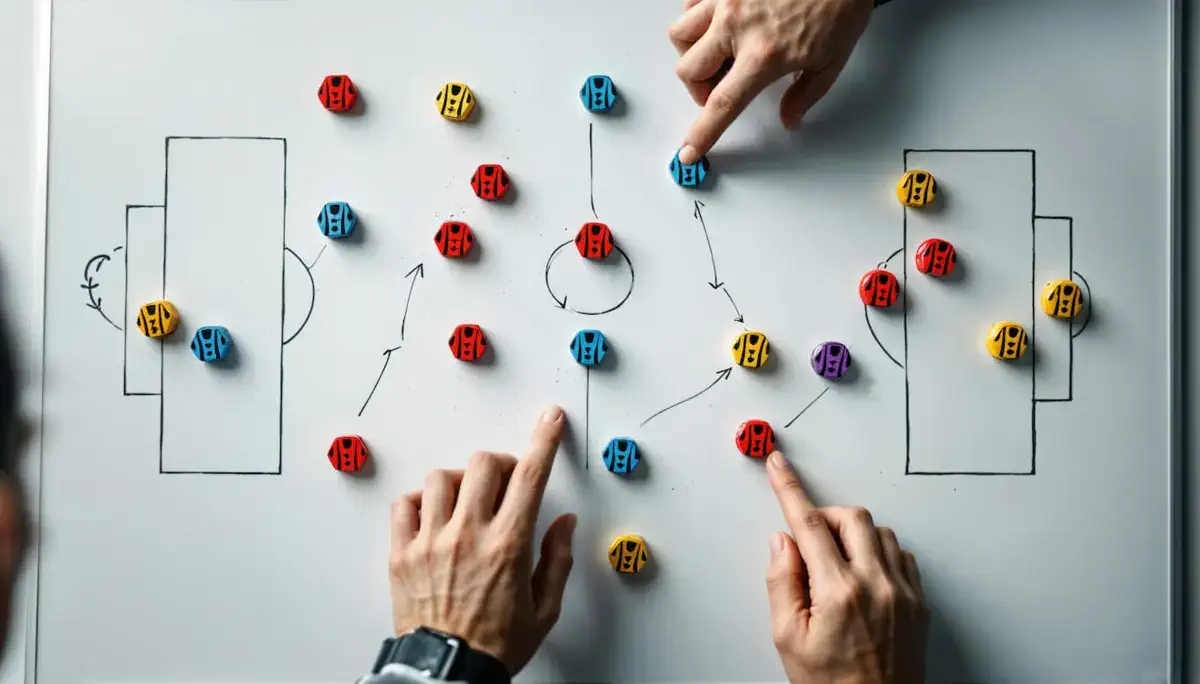
How the 4-2-3-1 Works in Possession
Once the team has the ball, the 4-2-3-1 formation is all about structure. It starts with the goalie and the center-backs playing out from the back. They want to move the ball sleek and clean through the lines. This forces the other team to run and get tired.
The double pivot is a big part of how to use 4-2-3-1 formation in the correct way. One of those midfielders stays deep to help the defenders. The other one might move forward a bit more to support the attack – they keep the ball moving and look for gaps.
You will see a lot of passing triangles in 4-2-3-1. A triangle might be between a full-back, a midfielder, and a winger. So it is really hard for the defense to get the ball. And that's a simple way to keep possession and move up the pitch.
The 4-2-3-1 formation also stretches the field wide. Full-backs are to push up high and wide during attack – it gives the team more room to work in the middle. It's a savvy move that opens up a lot of scoring options.
The job of the number 10 is to link the midfield to the attack. This player looks for little pockets of space between the lines. Once they get the ball, the 4-2-3-1 formation attacking becomes very dangerous – they may slide a pass through or take a shot themselves.
Success comes when the front four swap positions to confuse the defense. A winger might move inside while the striker drops deep – a move that makes the 4-2-3-1 formation very hard to mark.
How the 4-2-3-1 Works Out of Possession
The shape of the 4-2-3-1 formation changes at speed when the team loses the ball. Most teams drop into a 4-4-1-1 or a 4-4-2 block – i.e. the wingers move back to help the midfielders defend the wide areas. So the team stays very compact and hard to break.
Compactness is the number one goal of the 4-2-3-1 formation when defending. You want to stay close together so the other team cannot pass through you. You are doing a great job if they have to pass the flanks.
To be safe, teams use a mid-block with the 4-2-3-1 formation. They wait for the other team to get to the halfway line before they start to press. This walls off the space at the back of the defense and puts on pressure – a savvy way to manage the "over/under" goals markets.
Pressing triggers tell the team when to go and win the ball. A bad touch by the other team's defender, for instance, is a signal to jump on. The striker starts the press in the 4-2-3-1 formation, then the midfielders move up to cut off all passing lanes.
The double pivot midfielders have to work very hard in the 4-2-3-1 formation. They screen the defense, stop passes to the striker. If one goes to press, the other stays back and covers the middle.
It is also key to shift the shape as the ball moves. The whole team slides across the pitch as if they are on a string. This prevents the opponent from finding a gap on the far side.
Key Player Roles in 4-2-3-1
Every spot in the 4-2-3-1 formation has a top role to play. The goalie has to be good with their feet to help with build-up – they are a sweeper who cleans up any long balls. And their sweeping can begin a counter-attack in an instant.
Center-backs in 4-2-3-1 have to be strong and smart. They mark the strikers of the other team and win aerial battles. But they also have to be calm when they have the ball. A good, calm first pass can break the other team’s first line of pressure.
Full-backs are the runners in the 4-2-3-1 formation – they defend their wing but also fly forward to assist the attack. They give the width the team needs to stretch the defense.
And to the most important part of the 4-2-3-1 formation tactics – the double pivot. One player is a "destroyer" and the other a playmaker. They both move in sync to see to it that the middle always has a cover.
The number 10 is the creative man in the 4-2-3-1 formation. Sharp sight to find the final pass that leads to a goal comes from this player. And he is often the star that fans love to watch. He knits up everything with ease and makes for sleek attacks.
Wingers in 4-2-3-1 must be speedy and good at 1v1s. They keep wide to pull defenders away but often cut inside to score. They also have to assist their full-backs in defense – a really, really versatile role in the football formation 4-2-3-1.
The lone striker is the eye of the 4-2-3-1 formation. They hold up the ball, bring others into the game. They are poachers, always ready to have a go at goal. Their moves make space that the midfielder exploits.

Key Defensive Tactics
Teams use zonal marking to stay organised in 4-2-3-1. You do not follow a specific player – you guard a specific area. That way it is easy to keep the team shape tight and compact. And you kill the steam of the other team's attack.
Another common tactic in the 4-2-3-1 formation is high pressing. The front four players work together to win the ball back high up. This is risky but can lead to very quick goals.
Strengths and Weaknesses of the 4-2-3-1
The 4-2-3-1 formation has good and bad sides, as every plan. One big good side is the sway you hold on the midfield. Five midfielders. You outnumber the other team and it becomes a lot easier to keep the ball and hold your grip.
Also, the 4-2-3-1 formation makes for a very solid defense. Two holding midfielders. That’s a safety net – you are rarely left wide open if you lose the ball. It's a nice setup for the clean sheet market.
Another plus in 4-2-3-1 is that the attack is flexible. The wingers and the number 10 can swap places all game long. It makes for very unpredictable ways to slot the ball home.
But a top 4-2-3-1 formation weakness is the lonely striker. They can get cut off if the midfielders do not support them. And they may even spend the entire game chasing long balls and may get frustrated. This can mean a "push" or a low-scoring game.
The wings can also be a problem in 4-2-3-1. The full-backs are left 2v1 when the wingers do not track back – a common way teams concede goals or "give up the hook". You need hard-working wide players to be safe and certain.
This kind of structural imbalance is often reflected in the asian handicap, where small tactical weaknesses like exposed flanks can significantly influence handicap lines and expected goal margins.
A 4-3-3 setup can sometimes overload the 4-2-3-1 formation in the middle. You lose your hold if their three midfielders outdo your two holding players. See it as a battle of tactics that needs the help of the number 10.
Tactical Strengths:
- Cool blend of blocking goals out and scoring them.
- The five players in the middle usually win the ball.
- Can easily shape-shift into a 4-4-2 or 4-5-1.
- The front four are very hard to track for defenders.
Tactical Weaknesses:
- The forward can get very lonely up front.
- The full-backs have to run the length and breath of the pitch.
- Space can open up when wingers do not defend well.
- The middle opens up if the two pivots do not communicate.
Key Real-World Examples
Look at Spain for the 4-2-3-1 formation at its best. They were the favourites in every match from 2008 to 2012. Busquets and Xabi Alonso were a wall in the middle – and this let their creative stars pass teams to death.
Another top example is Bayern Munich under Hansi Flick. They did an absolutely terrifying, high-pressing 4-2-3-1 – they’d win the ball back in seconds and score right away. They won the Champions League in 2020, thanks to this aggressive style.
Real Madrid has used the 4-2-3-1 formation to lift many trophies too. They often had a “banker” midfield that set the tempo of the game. And this gave their class forwards a free hand to score.
PSG is an in-vogue team that loves 4-2-3-1. With it, they get to play all their big attackers at the same time. It is hard to balance but it gives them a fiery attacking flair – they score from anywhere on the pitch.
Germany’s World Cup-winning squad also had use for the 4-2-3-1 formation. They were very organized, never seemed to get out of position. They used the double pivot to call the tempo of every game.
Key Tips for Coaches and for Performance Analysts
The double pivot is the lifeblood of the 4-2-3-1 formation, for coaches. You need two players who understand each other without even looking. If one goes up, the other must stay. It's this teeter-totter move that keeps the team from counters.
Analysts love to look at PPDA when they study the 4-2-3-1 formation. This tells how hard a team presses the other side: a low number means the team is aggressive in winning the ball. And it's a great stat to evaluate teams in the 1x2 betting market, especially when assessing match dominance and expected control.
The number 10 has to be very, very up and doing. The 4-2-3-1 formation attacking turns very slow if they just laze around. They have to always be on the move to find space and help the striker. A lazy number 10 is a sure quick way to lose a match.
Coaches also have to be big on "pressing triggers" in training. The entire team has to know exactly when to pounce on the ball. Because the formation stretches and breaks if only one player presses.
Practical Coaching Advice:
- See to it that your holding midfielders move as a pair.
- Overlap your full-backs to create space in the middle.
- Don't let your striker get cut off from the rest.
- Practice very speedy moves from defense to attack.
- Communicate always to stop the center from opening up.
Analyst Checklist:
- Be wary of the gaps between the midfield and defense.
- Keep tabs on the PPDA to see how aggressive the team is.
- See where the number 10 spends most of their time.
- Count how many times the full-backs join the attack.
Common Mistakes in 4-2-3-1 Formation
A big mistake in 4-2-3-1 is when you pick the wrong players. You cannot have a slow number 10 who does not want to defend. Or full-backs who are scared to go past your half. So the 4-2-3-1 formation tactics only work when the players are round pegs in round holes.
Another error is a mute double pivot. They both might go for the same ball if they do not talk. And that leaves a big hole for the other team to pounce on.
What is more, sometimes teams forget to make for width in the 4-2-3-1 formation. It gets jam-packed when everyone tries to play from the middle – makes it very easy for a narrow defense to stop you. You must use the wings to drag the opponent apart.
Also, poor pressing coordination is a total disaster. If the striker runs but the midfield stays deep, the other team passes you around. And this leaves your defenders 1v1 against speedy attackers – a high-risk mistake.
Conclusion
4-2-3-1 is all about balance. The right blend of being safe and being deadly. It is flexible and that is why so many savvy managers love to use it. You can change your entire setup without changing a single player’s style.
Every player has a clear job in 4-2-3-1, and everyone – from keeper to striker – moves as one big unit.
As a fan or bettor, it is like you have a cheat code when you get the hang of this formation. You can read the game ahead even before you visit the best betting bookmakers for odds. You can tell when underdogs might cause an upset or when favourites are likely to keep a clean sheet.
So when next you see a 4-2-3-1 formation on screen, set your eyes to the middle. See how those two holding players spell the tempo of the game. And follow the moves of the creative trio just behind the talisman.
4-2-3-1 Formation FAQ
How does 4-2-3-1 formation work?
4-2-3-1 works via four rows of players spread across the entire pitch. It has: A solid back four. Two holding midfielders. Three attackers. And one striker. This layout lends top-of-the-game balance and lets the team switch easily between defence and attack.
Is 4-2-3-1 wide a good formation?
Yes, it stretches the opponent's defense. It uses wingers to stay near the sidelines and drag defenders out of position. This creates space in the middle for the number 10 and the striker – a savvy way to break down a tough team.
Which teams use a 4-3-3 formation?
4-3-3 is the best formation against 4-2-3-1. It's an aggressive setup that places three ballers high up the pitch. Liverpool and Manchester City use it. But many 4-2-3-1 teams can shape-shift into a 4-3-3 during the match if they need to score.
How to win against 4-2-3-1 formation?
You have to try to overload their double pivot. Or break into the space behind their full-backs. Speedy counters on the wings are also a savvy way to score them. Another smart move is to press their number 10 and cut off supply to the striker.